Why Your Effort Needs to Be Managed
It’s tempting to treat every class like a personal best attempt. Full send from the first minute, chase the biggest number on the screen, hold nothing back.
The problem is that effort you can’t sustain isn’t effort well spent. Learning how to manage your effort in a workout isn’t about holding back for the sake of it. It’s about spreading what you’ve got across the whole class, so the end feels as good as the start.
Effort Is the Dial You Control
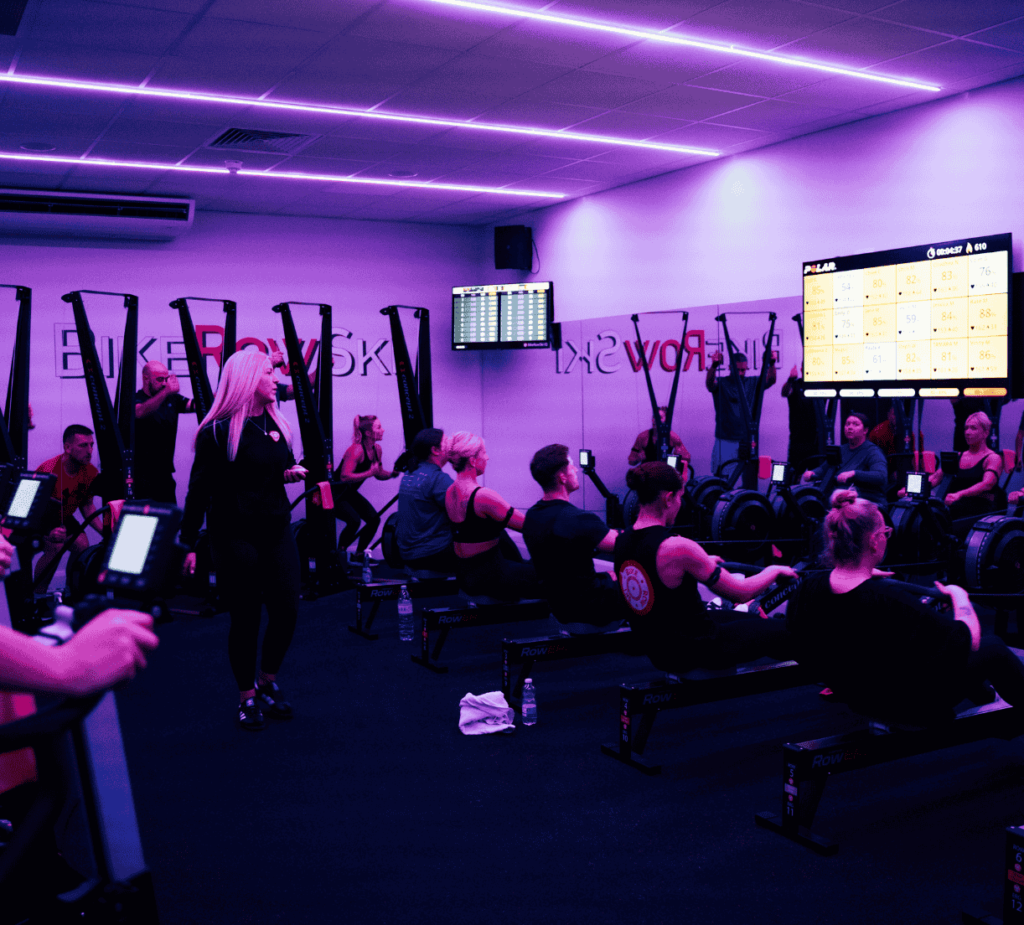
In our classes, the coach calls a rate and a length of time, and everyone moves together. What differs from person to person is how much force goes behind each stroke or turn of the pedals, and that is where your effort actually lives.
That’s deliberate. Because we coach by rate and time, you never have to match the person beside you. A first-timer holding a light, comfortable rate and an experienced member driving hard at the same rate are both doing the session exactly right. If you want the thinking behind it, here’s why we coach rate over pace.
Going All In Early Costs You Later
A class is a 45-minute session, built around three 12-minute phases. The first phase often feels manageable, which is exactly why it’s easy to spend too much too soon.
Go out too hard at the start and the second and third phases will feel very different. Effort spent early is effort you don’t have later, and the quality of your movement usually drops with it. Managing your effort means leaving yourself something for the whole session, not just the opening phase.
Simple Ways to Manage Your Effort in Class
- Start comfortably controlled. Your first phase should feel steady, not maximal. You can always add more once you know how the session is going.
- Use your breathing as a gauge. If you can’t hold a rhythm, you’ve probably gone out too hot.
- Listen to your coach. We’re not only calling out time, rates and damper settings. We’re guiding you on how to approach each phase.
- Judge your effort, not your neighbour’s. The RPE scale gives you language for how hard something feels, and understanding effort without fear explains why “enough” is usually less than you’d assume.
- Save your biggest push for when you can see the end. A strong finish is easier when you haven’t already spent it.
- Remember it applies across all three ergs. The bike, the rower and the ski each ask something different of your body, so steady effort helps you move well on all of them.
Some Days Need a Lower Dial
Your effort isn’t fixed. Sleep, work, family and stress all change what you have to give, and a good class doesn’t have to mean a hard one. Some days you’ll push, and some days showing up and moving well is the win.
If today is one of those low-energy days, here’s how to train when you’re drained. And for the bigger picture on choosing the right level, see understanding intensity in a healthy way.
There Are No Expectations Here
At BikeRowSki, there’s no scoreboard for who pushed hardest today. Nothing is expected. Some members love watching their numbers. Others never look at the screen. Both can enjoy exactly the same class.
If you’re nervous about getting it wrong, here’s what you don’t need to worry about in class. New to BikeRowSki? Our first timers page is the best place to start.
The BikeRowSki Way
Our coaching provides guidance. Our programming creates togetherness. Our community makes people feel like they belong. Managing your effort is how you get the most from all three, and it’s a skill that gets easier with every class.
Let’s Summarise
Effort isn’t something to spend all at once. Choose the level that suits you today, keep it steady across the full 45 minutes, and trust your coach to guide you. Whether you train at Fairview, Tallaght, Bray, Douglas in Cork or any of our other studios, you’re never doing this alone.
Ready to find the effort level that works for you? Book a class and let your coach help you manage it from start to finish.
FAQ
How do I manage my effort in a workout?
Start steady, use your breathing as a gauge, and keep something in reserve for the second and third phases. Your coach will guide you on how to approach each session.
Does managing my effort mean I’m not working hard enough?
No. It means you’re working at the right level for you, for the whole class. Steady, purposeful effort builds more over time than going flat out early and fading.
Do I need to match the rate and effort of the people around me?
You’ll follow the same rate as the room, but how much force you put behind it is up to you. Nothing is expected, and everyone works at their own intensity.
What if I go out too hard?
It happens. Settle your breathing, ease off and let your coach help you rebuild. There’s no judgement, and you’ll learn your pacing with every class.