If you’ve ever wondered why some workouts feel sustainable and steady while others feel intense and short-lived, the answer lies in your body’s energy systems.
At BikeRowSki, our sessions are programmed around how your body naturally produces and uses energy. Understanding these systems can help you pace yourself better, train smarter, and feel more confident in class.
Let’s break it down simply.
What Are Energy Systems?
Your muscles use a fuel source called ATP (adenosine triphosphate) to power movement. Whether you’re biking, rowing, skiing, running, or performing bodyweight exercises like squats and lunges, ATP is what allows your muscles to contract.
Your body has three main energy systems (or “engines”) that create ATP:
- Aerobic (oxygen-based)
- Lactic (anaerobic glycolysis)
- Alactic (creatine phosphate system)
Each system powers different types of effort and each one feels different during training.
1. The Aerobic Energy System
(Your Sustainable Training Zone)
The aerobic system is your body’s most sustainable engine. It uses oxygen to create energy and can power you for long periods of time.
In simple terms:
- This is your steady, controlled effort.
- On a Rate of Perceived Exertion (RPE) scale of 0–10, it feels like a 6–8 out of 10.
- You can maintain it for extended periods without needing to stop completely.
Activities like:
- Indoor cycling
- Rowing
- Ski erg training
- Jogging
- Brisk walking
…are primarily aerobic when performed at a moderate intensity.
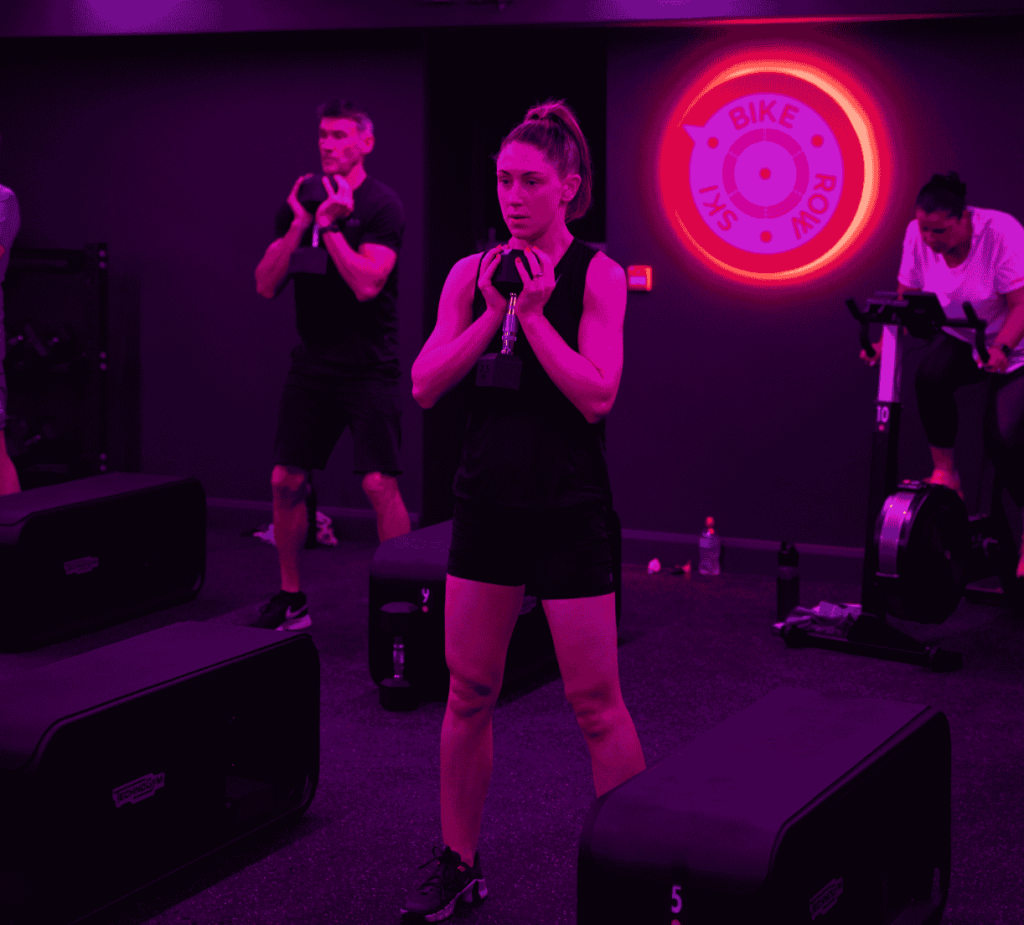
This is the foundation of BikeRowSki classes. Our 45-minute sessions focus on helping members maintain a sustainable aerobic effort, typically around 60–80% of their maximum effort.
Why? Because aerobic training:
- Improves cardiovascular fitness
- Builds endurance
- Enhances recovery
- Is accessible for beginners and experienced members alike
This is the “happy place” of training: challenging, but sustainable.
2. The Lactic Energy System
(High Effort, Shorter Duration)
The lactic system (also known as anaerobic glycolysis) kicks in when intensity increases and oxygen becomes limited.
This is where exercise starts to feel:
- Uncomfortable
- Fatiguing
- Hard to sustain
On the RPE scale, this feels like 8–9 out of 10.
Typically, this effort can only be sustained for up to about 2–4 minutes before you hit a wall and need extended recovery time.
While this system is trainable, it requires:
- Longer rest periods
- Greater recovery between sessions
Many people unknowingly overtrain this energy system, which can impact recovery and long-term progress.
In a BikeRowSki setting, we intentionally avoid spending extended time at this intensity because our goal is to provide a sustainable aerobic training experience, not a maximal effort sprint session.
3. The Alactic Energy System
(Max Effort, Very Short Duration)
The alactic system is your explosive energy system. It uses creatine phosphate and does not require oxygen.
This is:
- 9–10 out of 10 effort
- 5–20 seconds maximum
- Full sprint territory
After using this system, your body needs significant recovery time before repeating the effort effectively.
Because BikeRowSki classes are designed to be inclusive and sustainable for a full 45-minute session, we do not programme prolonged maximal efforts. Instead, we prioritise steady aerobic intervals that allow members to maintain quality movement and feel strong throughout.
Why This Matters for Your Training
Understanding energy systems helps you:
- Pace your effort properly
- Avoid overtraining
- Recover more effectively
- Feel more confident in class
- Choose the right training style for your goals
At BikeRowSki, our focus is simple:
Help every member maintain a sustainable aerobic effort that feels strong, controlled, and achievable.
Whether you’re new to fitness or building long-term endurance, our classes are structured so that every ability level can train within their own 60–80% range and leave feeling stronger, healthier, and happier.
How Energy Systems Apply to BikeRowSki Classes
In a typical BikeRowSki session, you’ll experience:
- Repeated aerobic intervals (2–4 minutes)
- Short recovery periods (20–40 seconds)
- Controlled pacing
- Clear coaching guidance
- A sustainable 45-minute flow
This structure allows you to:
- Improve endurance
- Build cardiovascular fitness
- Avoid unnecessary burnout
- Stay consistent week to week
Consistency, not intensity, drives long-term results.
Frequently Asked Questions
Is BikeRowSki suitable for beginners?
Yes. Our classes are designed to keep members in a sustainable aerobic zone, making them accessible for beginners while still challenging for experienced members.
Do I need to train at maximum effort to see results?
No. Most fitness benefits (especially cardiovascular improvements) come from consistent aerobic training, not maximal efforts.
How often should I train aerobically?
For most people, 2 – 4 aerobic sessions per week is an effective and sustainable approach.
Final Thoughts
All three energy systems are valuable. However, understanding which one you’re training (and how it should feel) can make your workouts more effective and enjoyable.
At BikeRowSki, we prioritise sustainable aerobic training so every member of our community can move confidently, build endurance, and feel supported in every class.
If you’re curious about how our sessions are structured, explore our timetable or speak to one of our coaches in studio.